
Sensory Integration

Every person has a distinct sensory profile that guides the unique way they experience the world around and within them.
"Sensations are food for the brain”
-Jean Ayers
The Process
Sensory Integration is the whole process of taking in information through our senses, putting it together with information we already have (memories & knowledge), processing a plan, and responding in what way seems most appropriate.
It’s automatic because we do it thousands of times a day. Can you imagine if you had to “think through” every sense you encountered? Every sense impacts every other sense, while each part of the process is impacting the other parts of the process. The purpose of the system is to help the human body adapt and thrive through life experiences.

Handouts
-
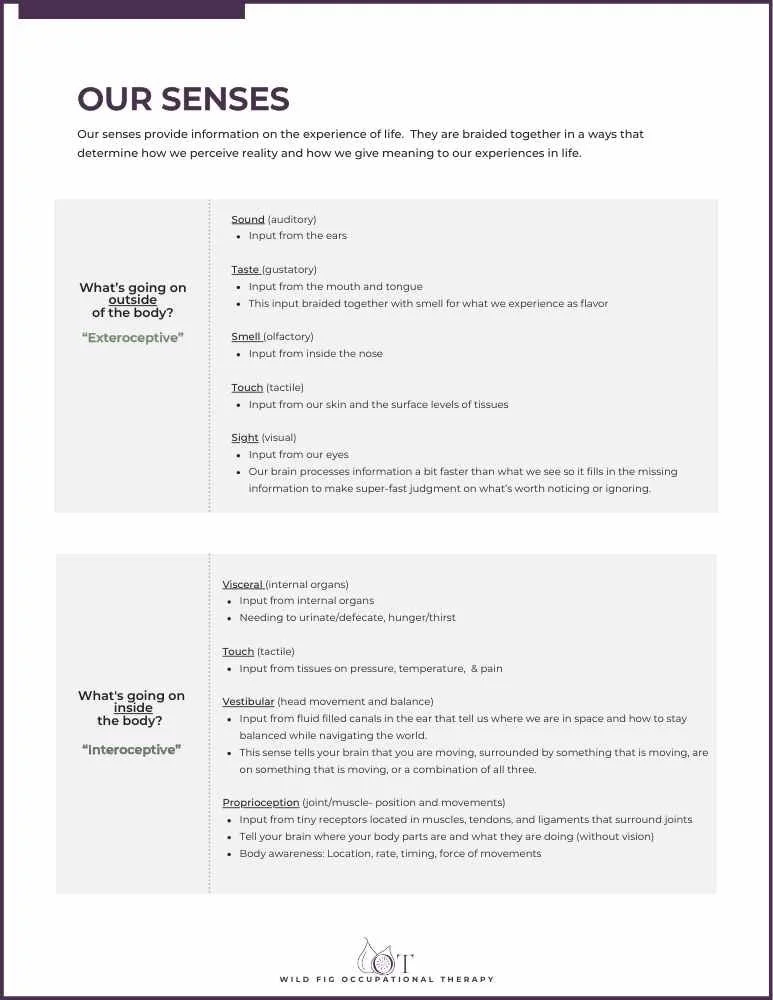
Our Senses
Our senses provide information on the experience of life. They exist even if we don't have the words to label them. They are braided together in ways that determine how we perceive reality and the meaning we give our life. This handout details each of the eight.
-
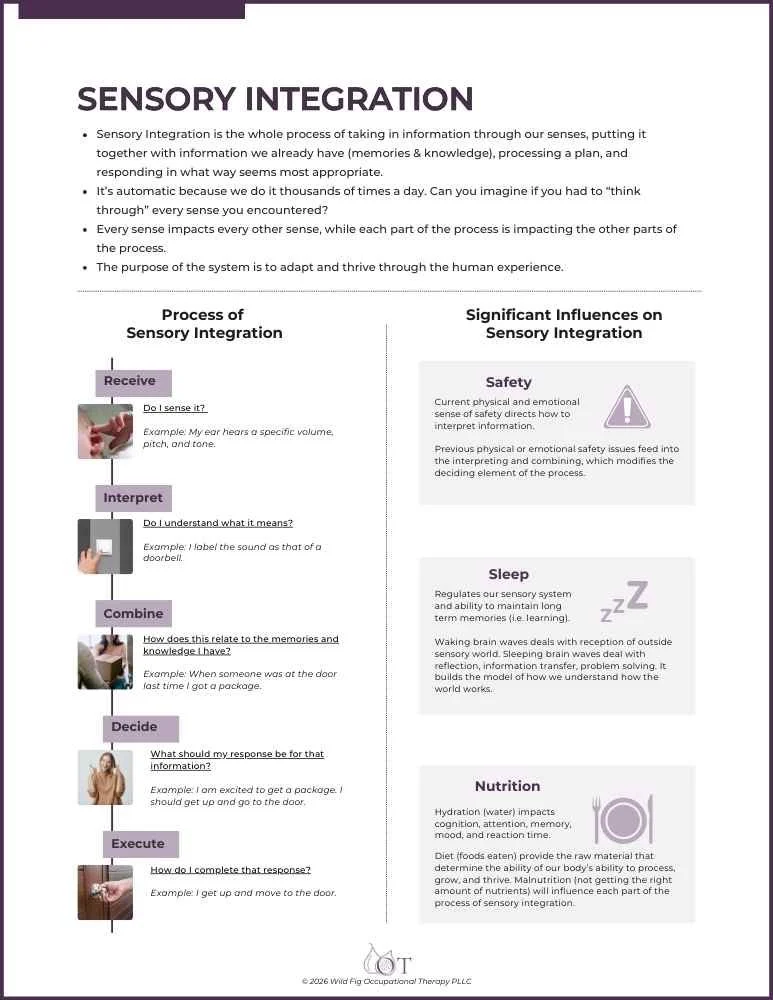
Sensory Integration
Sensory Integration is the whole process of taking in information through our senses, putting it together with information we already have (memories & knowledge), processing a plan, and responding in what way seems most appropriate. This handout explains the process and main factors that impact it.
-
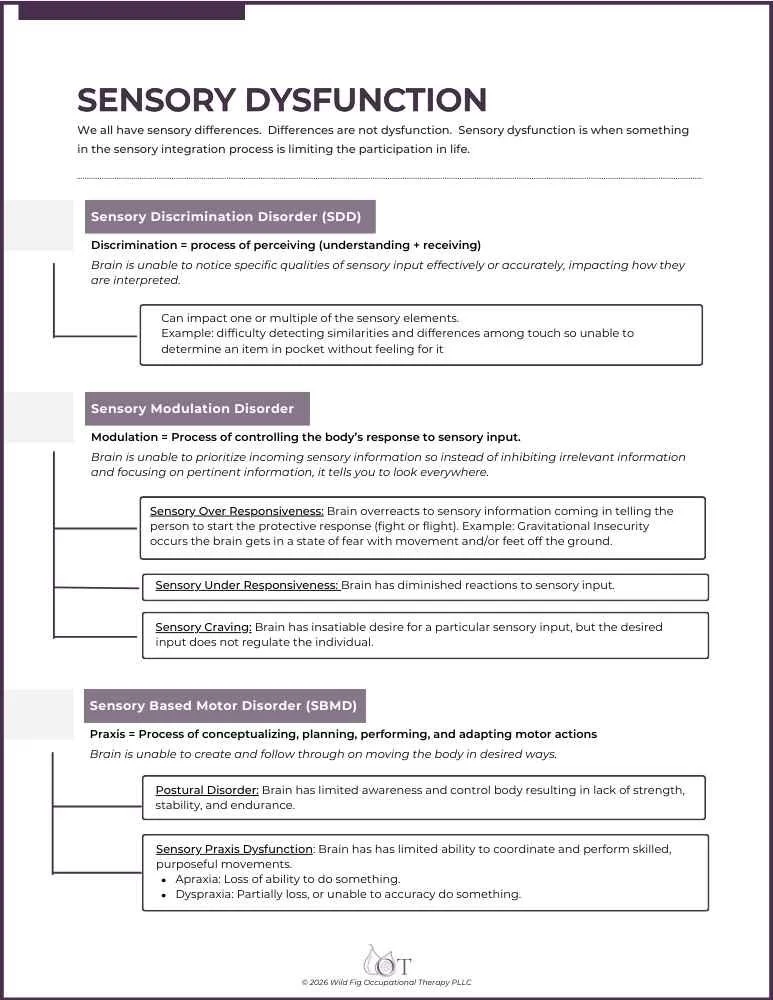
Sensory Dysfunction
We all have sensory differences. Differences are not dysfunction. Sensory dysfunction is when something in the sensory integration process is limiting the participation in life. This handout describes the 3 main types.
-
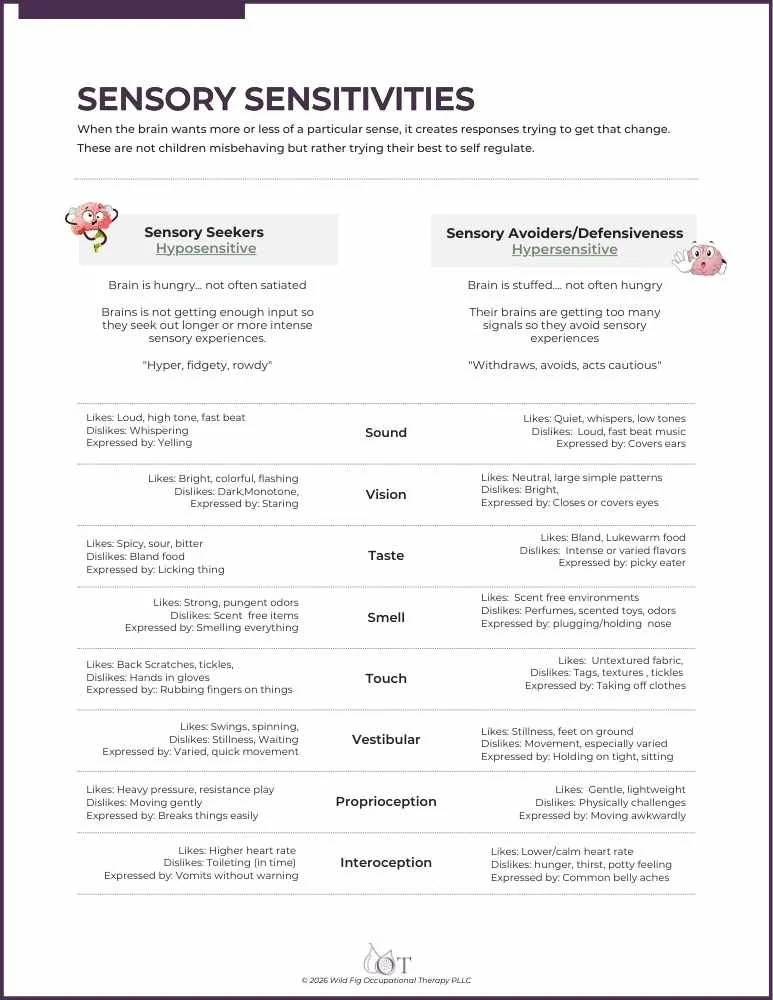
Sensory Sensitivities
When the brain wants more or less of a particular sense, it creates responses trying to get that change to self-regulate. This handout helps you identify these responses.
-
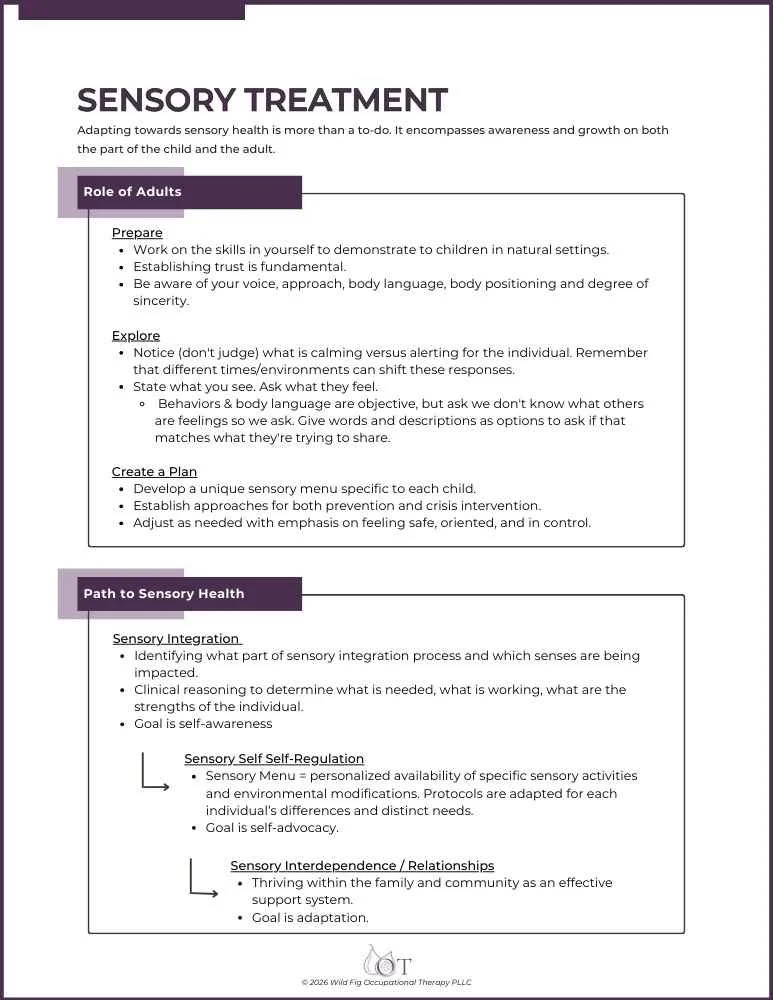
Sensory Treatment
Sensory health is more than a to-do list that is checked off each day. It is awareness, advocacy, and growth on both the part of the child and the adult. This handout outlines the process.
-
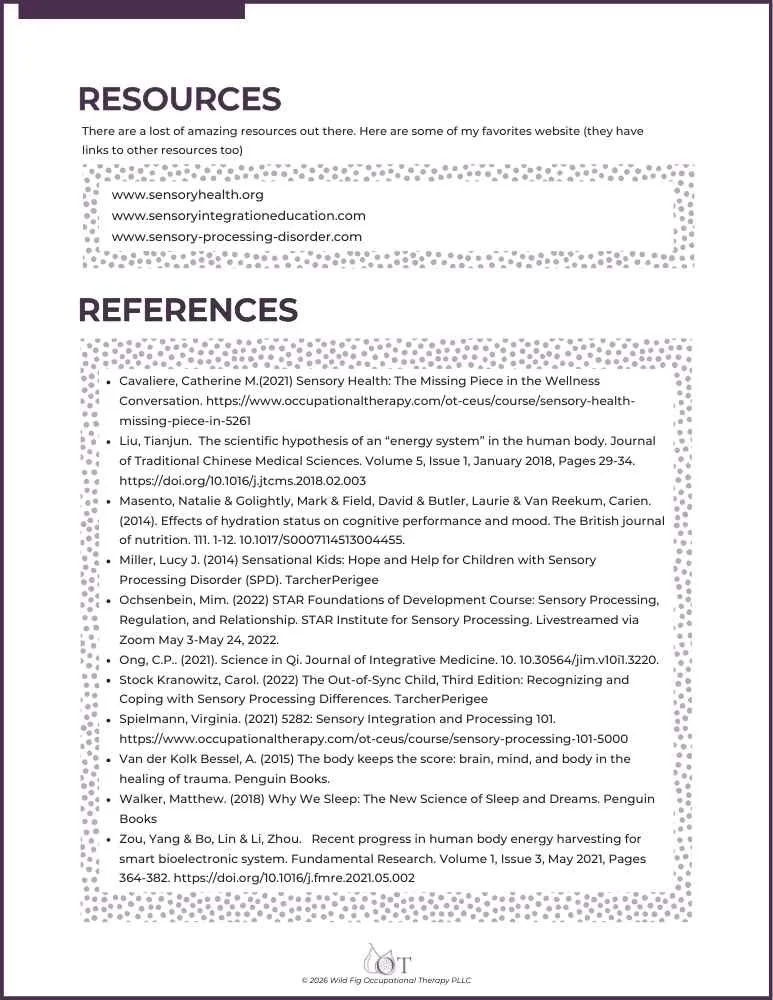
Sensory Resources
There are a lot of amazing resources out there to learn more about sensory processing. This handout directs you to some of my favorites online resources and books referenced.
“Children don't know how to ask for what they don't know they need. Their asking comes in the form of behavior.”
-Bonnie Harris